
Healthcare Professionals Hub
Joint Hypermobility
Pathway
Information for GPs
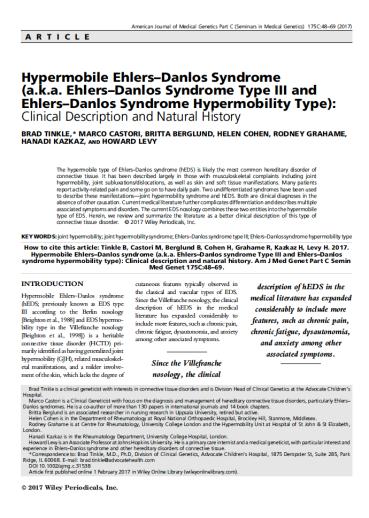
What to do if you are concerned that your patient has a type of EDS
Hypermobile EDS is currently diagnosed on the basis of a set of clinical criteria that only aid research and do not change the approach to hypermobility – see above. This clinical label should not change the approach to management, which should be based on the patient’s presenting concerns.
All other types of EDS are rare and have a known genetic cause. The following is designed to help identify those who may have a rare type of EDS or other genetic condition and who should be referred on for further investigation.
Features to screen
‘Red Flags’ or clinical features that taken as part of a whole assessment may suggest a need for specialist referral
Hypermobility / hypotonia can be part of a rare syndromic diagnosis. If your patient has any of the following distinctive features, it could suggest a genetic diagnosis.
Please consider onwards referral to clinical genetics (or the relevant secondary care speciality such as paediatrics, cardiology or metabolic bone)
- Dysmorphic features (paediatrics)
- Developmental delay (paediatrics)
- Abnormal scarring of skin and skin hyperextensibility
- Talipes
- Pectus deformity
- (Kypho)scoliosis
- Cardiovascular features such as aortic dilatation, family history of sudden vascular death
- Personal or family history of organ rupture eg bowel perforation
- Significant fracture history (metabolic bone)
- Pneumothorax
Patient facing information
See here for the patient facing section of the site.